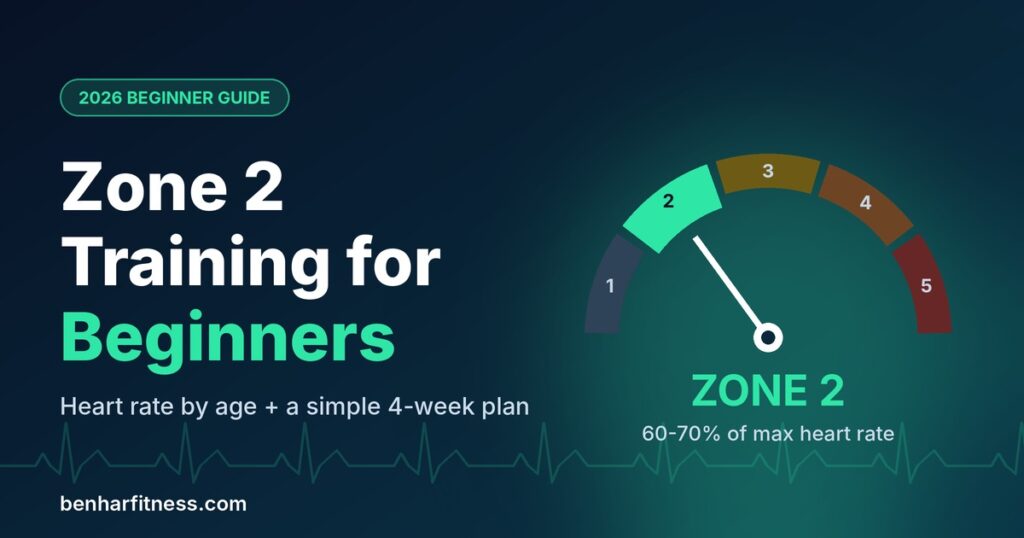
If you’re searching for zone 2 training for beginners, you’ve probably seen the term “Zone 2” all over your feed lately. Your smartwatch may even be telling you to stay in it. So what is Zone 2 training, and is it really worth slowing down for?
Short answer: yes, especially if you’re a beginner. Zone 2 training is easy-to-moderate cardio that builds endurance without wearing you out, and it’s one of the simplest fitness habits you can start this week. To pair it with the right eating plan, try our free fitness calculators.
Forget the numbers for a second. Zone 2 is the pace where you’re clearly exercising, but you could still chat with a friend the whole time. You’re breathing a bit harder than usual, you feel warm, and you finish thinking, “I could have done more.”
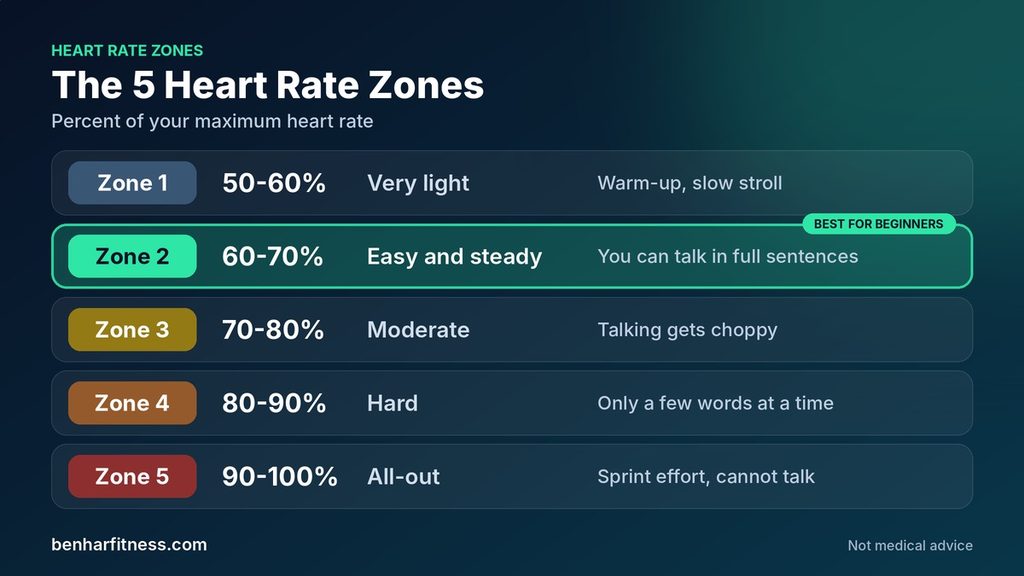
That last part is the point. Most of us assume a workout only counts if it leaves us exhausted. Zone 2 flips that idea. By keeping the effort low, you can train more often, recover faster, and build a strong aerobic base that makes everything else in fitness easier.
How to Find Your Zone 2 Heart Rate
If you like numbers, start with a simple estimate: subtract your age from 220 to get your rough maximum heart rate, then take 60 to 70 percent of that.
| Age | Zone 2 range (beats per minute) |
|---|---|
| 20 | 120 to 140 |
| 30 | 114 to 133 |
| 40 | 108 to 126 |
| 50 | 102 to 119 |
| 60 | 96 to 112 |
| 70 | 90 to 105 |
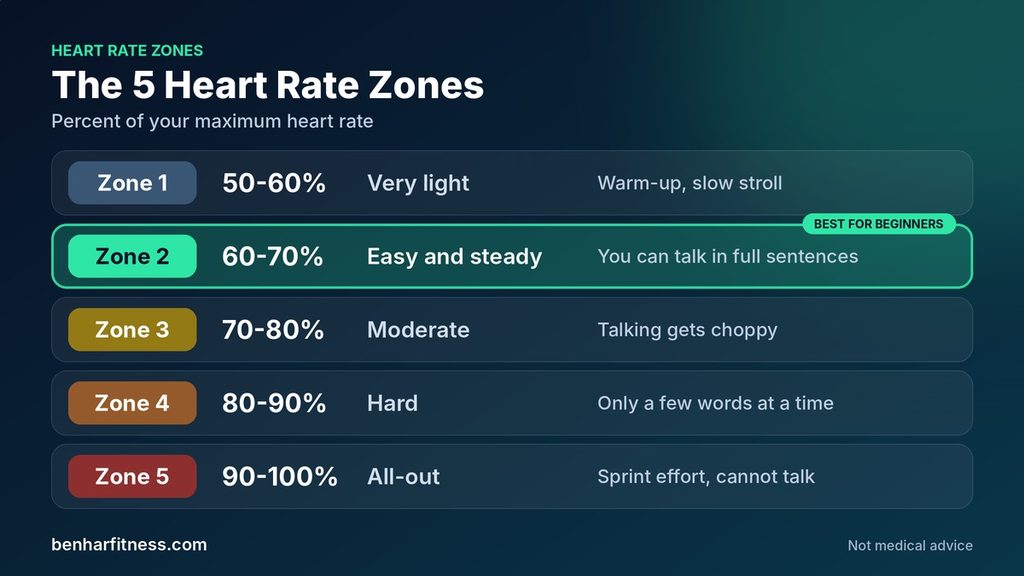
This formula is only an estimate. If you can speak in full sentences without gasping, you’re in the right zone. If you can only get out a few words at a time, ease off.
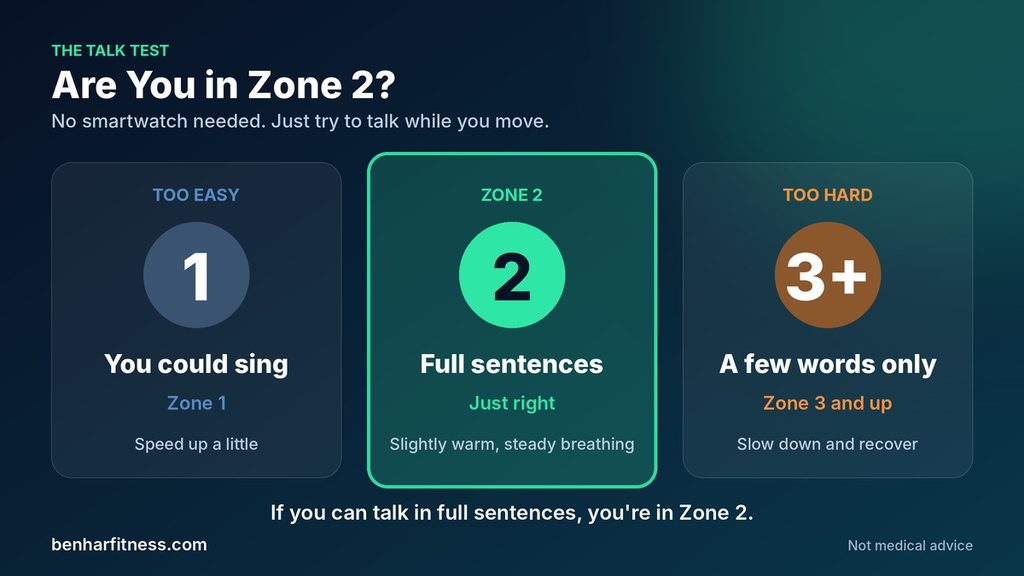
Here’s a mistake almost everyone makes: going too fast. If Zone 2 feels almost embarrassingly easy at first, you’re probably doing it right.
Why Zone 2 Training Is Trending in 2026
Part of the buzz comes from wearables. The American College of Sports Medicine ranked wearable technology as the number one fitness trend of 2026 (see the ACSM 2026 fitness trends report), and nearly half of US adults now own a fitness tracker or smartwatch. Most of those devices show your heart rate zone in real time, so staying in Zone 2 has never been easier to track.
The other part is that people are tired of burning out. Recovery-focused and low-intensity training has shown up on several 2026 trend lists, and Zone 2 fits perfectly.
Benefits of Zone 2 Training
Consistent Zone 2 work can build stamina, support fat loss, help your heart, and lower stress, all while being gentle on your joints.
One honest note on weight loss: Zone 2 helps because it’s easy to repeat, but you’ll still need a calorie deficit and some strength training to see real changes in your body.
How Many Calories Do You Need? Use Our Free Calculators
Training is only half the story. Your results also depend on how much you eat. Enter your age, weight and height in any of these free tools and get your numbers in seconds:
- TDEE Calculator: find how many calories you burn per day and your goal calories for weight loss or muscle gain.
- Macro Calculator: get your daily protein, carbs and fat.
- Protein Calculator: see how much protein you need each day.
- BMI Calculator: check your body mass index.
Start with the TDEE Calculator, then use the Macro Calculator to turn those calories into a daily eating plan.
Best Zone 2 Workouts for Beginners
You don’t need a gym or special gear. Good options include:
- Brisk walking: for many beginners, this is already Zone 2.
- Easy cycling: outdoors or on a stationary bike.
- Slow jogging: slow enough that you can keep talking.
- Swimming: relaxed laps.
- Incline treadmill walking, elliptical or rowing machine at a steady pace.
Choose the one you’ll actually enjoy and repeat it. That matters most.
Zone 2 Training Plan: A Simple 4-Week Start
Start with three sessions a week and add a few minutes each week:
- Week 1: 3 sessions of 20 minutes
- Week 2: 3 sessions of 25 minutes
- Week 3: 3 sessions of 30 minutes
- Week 4: 3 sessions of 30 to 35 minutes
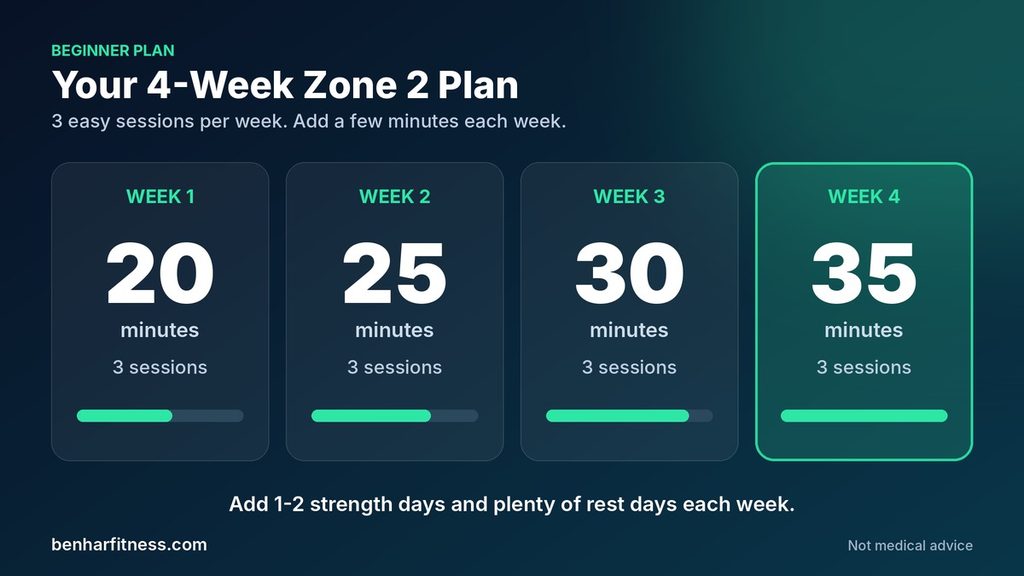
Add one or two strength workouts a week and plenty of rest days, and you have a balanced routine you can keep up for months.
Stay Consistent With the Benhar Habits App
The hardest part of any plan is showing up every week. That’s why we built Benhar Habits, a free habit tracker that helps you build daily routines, track your progress and stay consistent. Add your Zone 2 sessions as a habit and check them off after each workout.
- iPhone: Download Benhar Habits on the App Store
- Android: Get Benhar Habits on Google Play
Common Zone 2 Mistakes to Avoid
Besides going too fast, the biggest mistakes are:
- Trusting your watch blindly, since wrist sensors aren’t perfect
- Doing only Zone 2 and skipping strength work
- Ignoring nutrition (find your calories with the TDEE Calculator)
- Quitting after two weeks
In hot weather, your heart rate climbs at the same pace, so slow down rather than pushing through. In winter, hop on a treadmill or bike indoors and warm up first.
Is Zone 2 Training Safe for Everyone?
If you have a heart condition, high blood pressure or diabetes, or you’re coming back after a long break from exercise, check with your doctor before starting. Stop and get medical advice if you feel chest pain, severe dizziness or unusual shortness of breath.
Zone 2 Training FAQs
How long should a Zone 2 workout be?
Start with 20 to 30 minutes, then work up to 45 to 60.
Is walking Zone 2?
For many beginners, a brisk walk is. If you can talk but you’re breathing a little harder than normal, you’re likely there.
How often should I do Zone 2 training?
Two to three times a week to start.
Do I need a smartwatch for Zone 2?
No. The talk test is free and works well.
Is Zone 2 good for weight loss?
Yes, when combined with a calorie deficit and strength training. Use our TDEE Calculator to find your daily calories.
Final Thoughts
Zone 2 training proves you don’t have to suffer to get fitter. Try two or three easy sessions this week, keep it conversational, and build from there. Pair it with the right calories, protein, strength training and good sleep, and you’ll be surprised how much better you feel in a month.
Track your workouts with the free Benhar Habits app on iPhone or Android, then open our Fitness Calculators to plan your calories.
This article is for general information only and is not medical advice. Consult your doctor before starting a new exercise program.