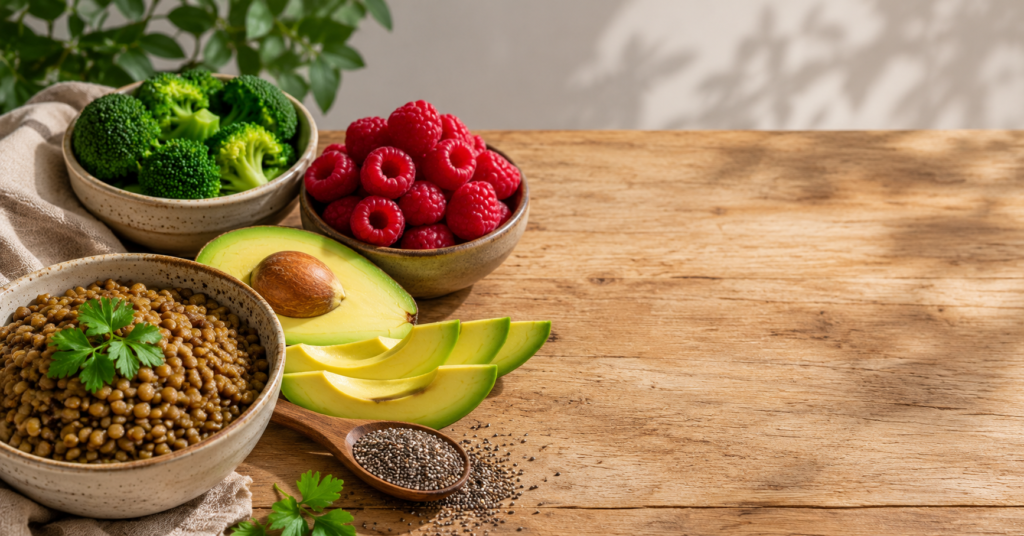
If you have tried every diet trend and still struggle to lose weight, the answer might be simpler than you think. The best high fiber foods for weight loss can help you feel full longer, control your appetite, and support a healthy gut, all without complicated rules or expensive supplements.
Fiber is one of the most underrated tools for shedding fat. It is not a fad. It is not a shortcut. It is a basic nutrient that most Americans do not get enough of.
In this guide, you will learn exactly why fiber matters, how it helps with weight loss, and which 25 foods give you the biggest fiber payoff. We will also cover a simple meal plan idea, a comparison table, and answers to common questions.
This article is written for beginners. No confusing medical jargon. Just clear, practical information you can use today.
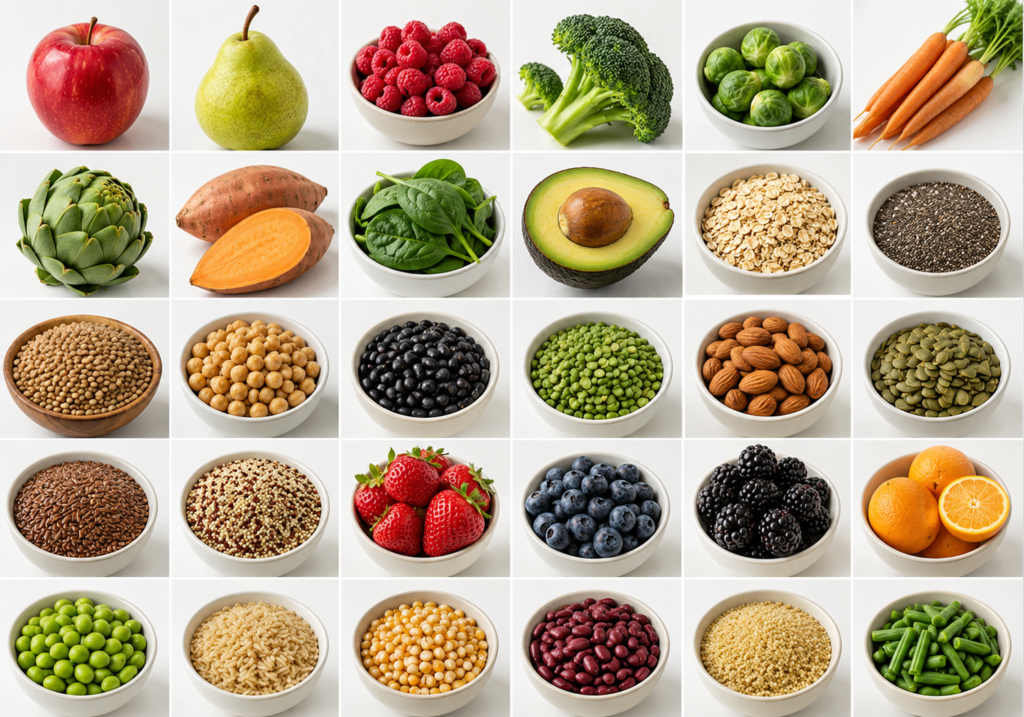
Why Fiber Matters for Your Health
Fiber is a type of carbohydrate found in plants that your body cannot fully digest. Unlike sugar or starch, it passes through your digestive system mostly intact.
This might sound like a downside, but it is actually the secret to fiber’s power.
- It feeds the good bacteria living in your gut.
- It helps keep your blood sugar steady after meals.
- It supports regular bowel movements and digestive comfort.
- It may help lower cholesterol levels over time.
- It adds bulk to meals without adding many calories.
According to Harvard Health, most adults only eat about half of the fiber they need each day. The Mayo Clinic recommends that women aim for around 21 to 25 grams of fiber daily, while men should aim for closer to 30 to 38 grams.
Eating foods rich in fiber is one of the easiest ways to close that gap.
How Fiber Helps With Weight Loss
Fiber does not burn fat by itself. Instead, it works quietly in the background to make weight loss easier and more sustainable.
Here is how a high fiber diet supports your goals:
- Fiber slows digestion. This keeps you feeling full for longer after meals.
- Fiber reduces hunger hormones. Foods high in fiber can help lower spikes in appetite-triggering signals.
- Fiber adds volume, not calories. A cup of raspberries fills your stomach with far fewer calories than a cup of chips.
- Fiber supports steady energy. Blood sugar swings often lead to cravings, and fiber helps smooth those swings out.
- Fiber feeds gut bacteria linked to healthy weight. The National Institutes of Health (NIH) notes that a healthy gut microbiome may play a role in metabolism and weight regulation.
Think of fiber as a natural appetite control tool. It will not replace a balanced diet or exercise, but it makes both easier to stick with.
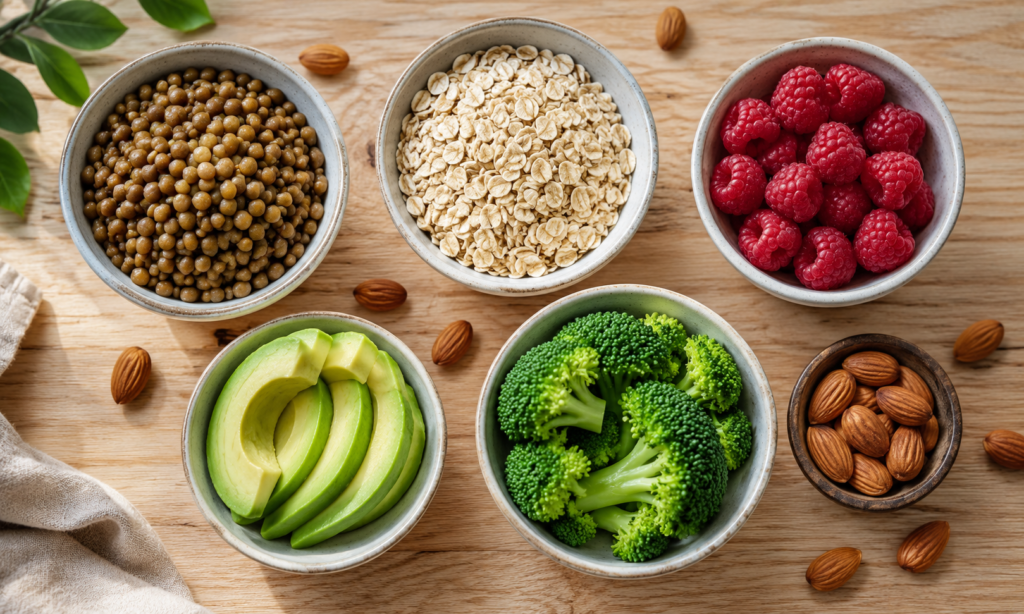
Soluble Fiber vs Insoluble Fiber: What Is the Difference?
Not all fiber works the same way. There are two main types, and your body needs both.
Soluble Fiber
Soluble fiber dissolves in water and forms a gel-like substance in your stomach.
- It slows down digestion, which helps you feel full.
- It can help lower LDL (bad) cholesterol.
- It helps manage blood sugar levels after meals.
- Found in oats, beans, apples, and citrus fruits.
Insoluble Fiber
Insoluble fiber does not dissolve in water. Instead, it adds bulk to your stool.
- It helps food move through your digestive system smoothly.
- It supports regular bowel movements.
- It may reduce the risk of constipation.
- Found in whole wheat, nuts, and vegetable skins.
Most whole plant foods contain a mix of both types. That is why eating a variety of fiber rich vegetables and fruits works better than focusing on just one type.
Top 25 High Fiber Foods for Weight Loss
Below is a detailed breakdown of the best foods with fiber you can add to your meals today. Each entry includes fiber content, calories, benefits, and how to eat it safely.
1. Lentils
Lentils are small legumes that come in green, brown, red, and black varieties.
- Fiber: About 15.6 grams per cooked cup
- Calories: Around 230 per cooked cup
- Benefits: High in plant protein, supports steady blood sugar, and helps you stay full
- Best Way to Eat: Add to soups, stews, or salads
- Precautions: May cause gas in people who are not used to eating legumes regularly
2. Black Beans
Black beans are a classic Latin American staple packed with nutrients.
- Fiber: About 15 grams per cooked cup
- Calories: Around 227 per cooked cup
- Benefits: Rich in antioxidants and plant-based protein
- Best Way to Eat: Mix into rice bowls, tacos, or a simple salad
- Precautions: Rinse canned beans to reduce sodium content
3. Chickpeas
Chickpeas, also called garbanzo beans, are versatile and filling.
- Fiber: About 12.5 grams per cooked cup
- Calories: Around 269 per cooked cup
- Benefits: Supports digestion and provides long-lasting energy
- Best Way to Eat: Roast them for a crunchy snack or blend into hummus
- Precautions: Watch portion sizes if eating store-bought hummus, since it can be high in oil
4. Split Peas
Split peas are dried, peeled peas often used in soups.
- Fiber: About 16.3 grams per cooked cup
- Calories: Around 231 per cooked cup
- Benefits: One of the highest fiber legumes available
- Best Way to Eat: Simmer into a hearty soup with vegetables
- Precautions: Cook thoroughly for easier digestion
5. Raspberries
Raspberries are one of the most fiber rich fruits you can find.
- Fiber: About 8 grams per cup
- Calories: Around 65 per cup
- Benefits: Low in sugar compared to other fruits, high in antioxidants
- Best Way to Eat: Add to yogurt, oatmeal, or eat fresh
- Precautions: None significant for most people
6. Avocado
Avocado is a creamy fruit loaded with healthy fats and fiber.
- Fiber: About 10 grams per whole avocado
- Calories: Around 240 per whole avocado
- Benefits: Supports heart health and helps absorb fat-soluble vitamins
- Best Way to Eat: Spread on whole grain toast or add to salads
- Precautions: High in calories, so watch portion sizes if you are tracking intake
7. Pears
Pears are sweet, juicy, and easy to add to a high fiber diet.
- Fiber: About 5.5 grams per medium pear with skin
- Calories: Around 100 per medium pear
- Benefits: Supports digestion and provides natural sweetness
- Best Way to Eat: Eat with the skin on for maximum fiber
- Precautions: Wash thoroughly to remove pesticide residue
8. Apples
Apples are one of the most accessible fiber rich fruits in the United States.
- Fiber: About 4.4 grams per medium apple with skin
- Calories: Around 95 per medium apple
- Benefits: Contains pectin, a soluble fiber linked to healthy cholesterol
- Best Way to Eat: Eat whole with the skin instead of juicing
- Precautions: Peeling removes a significant portion of the fiber
9. Broccoli
Broccoli is a cruciferous vegetable known for its nutrient density.
- Fiber: About 5.1 grams per cooked cup
- Calories: Around 55 per cooked cup
- Benefits: Rich in vitamin C and supports detoxification pathways
- Best Way to Eat: Steam lightly to keep nutrients intact
- Precautions: Overcooking can reduce nutrient content
10. Brussels Sprouts
Brussels sprouts are small cabbages packed with fiber.
- Fiber: About 4.1 grams per cooked cup
- Calories: Around 56 per cooked cup
- Benefits: Supports digestion and provides plant compounds linked to health
- Best Way to Eat: Roast with olive oil for a crispy texture
- Precautions: May cause bloating if eaten in very large amounts
11. Artichokes
Artichokes are an often overlooked but powerful fiber source.
- Fiber: About 10.3 grams per medium artichoke
- Calories: Around 60 per medium artichoke
- Benefits: One of the highest fiber vegetables by volume
- Best Way to Eat: Steam and dip leaves in a light vinaigrette
- Precautions: Preparation takes more time than other vegetables
12. Carrots
Carrots are a crunchy, naturally sweet vegetable.
- Fiber: About 3.6 grams per cooked cup
- Calories: Around 55 per cooked cup
- Benefits: High in beta-carotene, which supports eye health
- Best Way to Eat: Eat raw as a snack or roast with herbs
- Precautions: None significant for most people
13. Sweet Potatoes
Sweet potatoes are a filling, nutrient-dense root vegetable.
- Fiber: About 3.8 grams per medium potato with skin
- Calories: Around 112 per medium potato
- Benefits: Provides steady energy and supports immune function
- Best Way to Eat: Bake with the skin on for extra fiber
- Precautions: Toppings like butter or sugar can add unnecessary calories
14. Oats
Oats are one of the best-known high fiber foods for breakfast.
- Fiber: About 4 grams per cooked cup
- Calories: Around 166 per cooked cup
- Benefits: Contains beta-glucan, a soluble fiber linked to lower cholesterol
- Best Way to Eat: Cook with water or milk and top with fruit
- Precautions: Flavored instant oats often contain added sugar
15. Quinoa
Quinoa is a complete protein grain that also delivers solid fiber.
- Fiber: About 5.2 grams per cooked cup
- Calories: Around 222 per cooked cup
- Benefits: Provides all nine essential amino acids
- Best Way to Eat: Use as a base for grain bowls or salads
- Precautions: Rinse before cooking to remove a naturally bitter coating
16. Barley
Barley is a chewy grain often used in soups.
- Fiber: About 6 grams per cooked cup
- Calories: Around 193 per cooked cup
- Benefits: Supports blood sugar control and digestive health
- Best Way to Eat: Add to vegetable soup or a grain salad
- Precautions: Contains gluten, so avoid if you have a gluten sensitivity
17. Whole Wheat Pasta
Whole wheat pasta is a simple swap for a high fiber diet.
- Fiber: About 6.3 grams per cooked cup
- Calories: Around 174 per cooked cup
- Benefits: Provides more fiber and nutrients than refined pasta
- Best Way to Eat: Pair with vegetables and a lean protein
- Precautions: Still a source of carbohydrates, so watch portion size
18. Chia Seeds
Chia seeds are tiny seeds that absorb liquid and form a gel.
- Fiber: About 9.75 grams per ounce (2 tablespoons)
- Calories: Around 138 per ounce
- Benefits: Rich in omega-3 fats and supports fullness
- Best Way to Eat: Soak in milk or yogurt overnight for a pudding
- Precautions: Drink enough water when eating chia seeds
19. Flaxseeds
Flaxseeds are another small seed loaded with fiber and healthy fats.
- Fiber: About 7.6 grams per ounce (2 tablespoons)
- Calories: Around 150 per ounce
- Benefits: Contains lignans, plant compounds linked to hormone balance
- Best Way to Eat: Grind before eating for better nutrient absorption
- Precautions: Whole flaxseeds may pass through the body undigested
20. Almonds
Almonds are a popular crunchy snack with a solid fiber count.
- Fiber: About 3.5 grams per ounce (about 23 almonds)
- Calories: Around 164 per ounce
- Benefits: Provides healthy fats and supports heart health
- Best Way to Eat: Portion into small servings to avoid overeating
- Precautions: High in calories, so measure servings carefully
21. Popcorn (Air-Popped)
Popcorn is a whole grain snack that is naturally high in fiber.
- Fiber: About 3.5 grams per 3 cups popped
- Calories: Around 93 per 3 cups popped
- Benefits: Satisfying volume for very few calories
- Best Way to Eat: Air-pop it and season with herbs instead of butter
- Precautions: Movie theater popcorn is often loaded with added oil and salt
22. Edamame
Edamame is young soybeans, often served steamed in the pod.
- Fiber: About 8 grams per cooked cup
- Calories: Around 189 per cooked cup
- Benefits: High in plant protein and fiber together
- Best Way to Eat: Steam and lightly salt as a snack
- Precautions: Choose organic when possible if you prefer non-GMO soy
23. Whole Grain Bread
Whole grain bread is a practical daily source of fiber.
- Fiber: About 2 to 3 grams per slice
- Calories: Around 80 to 100 per slice
- Benefits: Easy way to add fiber to everyday meals
- Best Way to Eat: Check labels for “100% whole grain” as the first ingredient
- Precautions: Many breads labeled “wheat” are still mostly refined flour
24. Spinach
Spinach is a leafy green that fits into almost any meal.
- Fiber: About 4.3 grams per cooked cup
- Calories: Around 41 per cooked cup
- Benefits: High in iron and supports overall nutrient intake
- Best Way to Eat: Sauté lightly or blend into smoothies
- Precautions: People on blood-thinning medication should ask a doctor about vitamin K intake
25. Raspberried Whole Grains Mix (Bran Cereal)
Bran cereal is one of the most concentrated high fiber foods available.
- Fiber: About 7 to 10 grams per one-cup serving, depending on brand
- Calories: Around 100 to 130 per serving, depending on brand
- Benefits: Convenient way to boost daily fiber intake at breakfast
- Best Way to Eat: Choose brands with low added sugar
- Precautions: Some bran cereals contain more sugar than expected, so read labels
Fiber Comparison Table
Use this quick-reference table to compare your favorite high fiber foods side by side.
| Food | Serving Size | Fiber (g) | Calories |
|---|---|---|---|
| Split Peas | 1 cup cooked | 16.3 | 231 |
| Lentils | 1 cup cooked | 15.6 | 230 |
| Black Beans | 1 cup cooked | 15.0 | 227 |
| Chickpeas | 1 cup cooked | 12.5 | 269 |
| Artichoke | 1 medium | 10.3 | 60 |
| Avocado | 1 whole | 10.0 | 240 |
| Chia Seeds | 1 oz | 9.75 | 138 |
| Raspberries | 1 cup | 8.0 | 65 |
| Edamame | 1 cup cooked | 8.0 | 189 |
| Flaxseeds | 1 oz | 7.6 | 150 |
| Whole Wheat Pasta | 1 cup cooked | 6.3 | 174 |
| Barley | 1 cup cooked | 6.0 | 193 |
| Quinoa | 1 cup cooked | 5.2 | 222 |
| Pear | 1 medium | 5.5 | 100 |
| Broccoli | 1 cup cooked | 5.1 | 55 |
| Spinach | 1 cup cooked | 4.3 | 41 |
| Apple | 1 medium | 4.4 | 95 |
| Brussels Sprouts | 1 cup cooked | 4.1 | 56 |
| Oats | 1 cup cooked | 4.0 | 166 |
| Sweet Potato | 1 medium | 3.8 | 112 |
| Carrots | 1 cup cooked | 3.6 | 55 |
| Almonds | 1 oz | 3.5 | 164 |
| Popcorn | 3 cups popped | 3.5 | 93 |
| Whole Grain Bread | 1 slice | 2.5 | 90 |
| Bran Cereal | 1 cup | 8.5 | 115 |
A Simple One-Day Fiber Meal Plan
Here is a sample fiber meal plan to help you visualize how these foods fit into a real day.
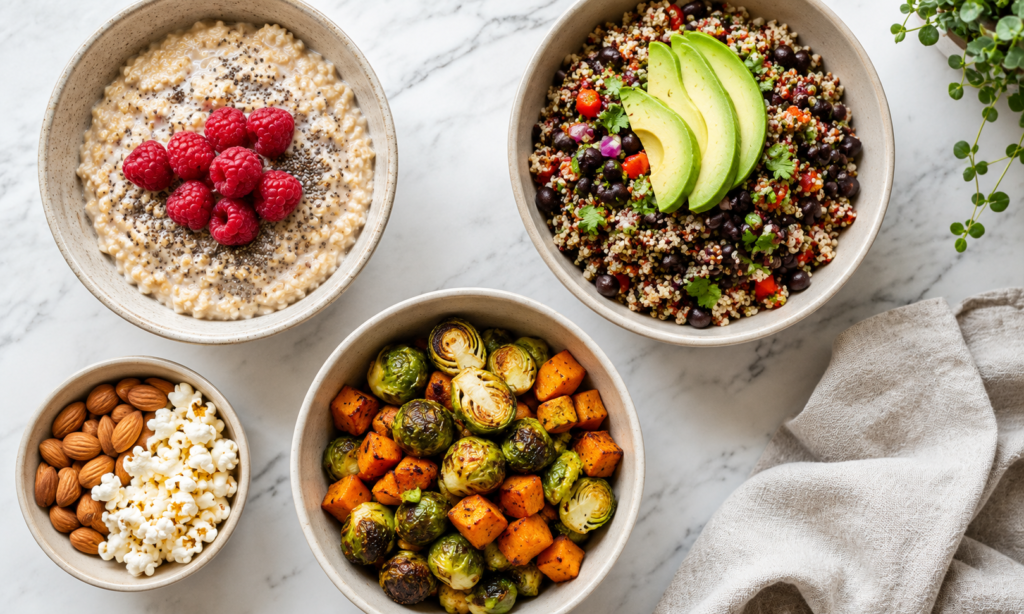
- Breakfast: Oats topped with raspberries and a spoon of chia seeds
- Snack: An apple with a small handful of almonds
- Lunch: A quinoa bowl with black beans, spinach, and avocado
- Snack: Air-popped popcorn or edamame
- Dinner: Grilled chicken with roasted Brussels sprouts and a sweet potato
This single day alone can provide well over 30 grams of fiber, which meets or exceeds the daily recommendation for most adults.
Tips to Increase Your Daily Fiber Intake Safely
Increasing fiber too quickly can cause discomfort. Follow these tips for a smooth transition.
- Add fiber gradually over two to three weeks instead of all at once.
- Drink plenty of water throughout the day as you increase fiber.
- Choose whole fruits over fruit juice whenever possible.
- Read nutrition labels and look for foods with at least 3 grams of fiber per serving.
- Pair fiber rich vegetables with a protein source for balanced meals.
According to the CDC, less than 10 percent of American adults meet the recommended daily fiber intake. Small, consistent changes make a bigger difference than trying to overhaul your entire diet overnight.
Common Mistakes People Make With High Fiber Diets
Even well-intentioned eaters can slip up. Watch out for these common issues.
- Relying only on fiber supplements instead of whole foods
- Increasing fiber intake without increasing water intake
- Assuming all “wheat” bread is automatically high in fiber
- Ignoring insoluble fiber and focusing only on soluble sources
- Expecting fast results instead of steady, gradual progress
Frequently Asked Questions
Q: How much fiber do I need daily for weight loss? Most adult women need about 21 to 25 grams of fiber daily, and most adult men need about 30 to 38 grams, according to the Mayo Clinic. These amounts also apply to general health, not just weight management.
Q: Can eating too much fiber cause problems? Yes, eating too much fiber too quickly can lead to bloating, gas, or stomach discomfort. It is best to increase your intake slowly and drink enough water.
Q: What are the best high fiber foods for weight loss? Legumes like lentils and black beans, vegetables like broccoli and artichokes, and fruits like raspberries and pears are among the best high fiber foods for weight loss because they are filling and low in calories.
Q: Is fiber more important than counting calories? Fiber and calories both matter, but focusing on high fiber foods naturally helps control portion sizes and hunger, which can make calorie management easier.
Q: Do fiber supplements work as well as whole foods? Whole foods provide fiber along with vitamins, minerals, and antioxidants that supplements cannot fully replace. The NIH recommends getting fiber from food first whenever possible.
Q: Can children follow a high fiber diet too? Children need fiber as well, but their needs are lower than adults. It is best to check with a pediatrician for age-appropriate fiber recommendations.
Scientific References
- Harvard T.H. Chan School of Public Health, “Fiber” — nutrition source overview on dietary fiber and health outcomes.
- Mayo Clinic, “Dietary fiber: Essential for a healthy diet” — guidance on daily fiber recommendations.
- National Institutes of Health (NIH), Office of Dietary Supplements — resources on fiber and gut health.
- Centers for Disease Control and Prevention (CDC), nutrition data on American dietary fiber intake trends.
Conclusion
The best high fiber foods for weight loss are not exotic or expensive. They are simple, everyday foods like beans, oats, berries, and vegetables that you can find in any grocery store.
By adding more foods rich in fiber to your plate, you can feel fuller, support your digestion, and make weight loss feel more manageable. Start small, choose two or three foods from this list, and build your habits from there.
Consistency with a high fiber diet, paired with regular movement and balanced eating, is one of the most sustainable paths toward long-term health.